
If you drive in Oklahoma, you already know the weather here doesn’t do anything halfway. One week it’s blazing sun and dust, the next it’s a sideways downpour, and by winter you’re scraping ice off the glass before your morning commute. With all that going on, it’s no wonder so many of our customers come to us wondering which windshield treatment actually holds up: Rain-X or ceramic coating.
We get this question all the time at ShinePro, and honestly, it’s a good one. Both products are designed to help water bead and roll off your glass instead of smearing across it, but they work in very different ways, last for very different amounts of time, and fit very different budgets. In this guide, we’re going to walk through the real differences between Rain-X vs ceramic coating so you can decide which one is right for your car, truck, or fleet. And if your windshield has more going on than a coating can fix (chips, cracks, or a windshield that’s simply seen better days), we also handle windshield replacement in OKC, so we’ve got you covered from every angle.
Quick Verdict: Which One Should You Choose?
If you want the short answer before we get into the details: Rain-X is a great low-cost option if you want something super easy to apply and don’t mind reapplying it every few weeks. Ceramic coating costs more upfront and takes more prep work, but it delivers much longer-lasting protection, better clarity, and noticeably less wiper chatter over time.
For daily drivers, work trucks, or anyone who’s tired of babying a treatment every month, our team generally leans toward recommending a ceramic glass coating. But we’ll walk you through both so you can make the call yourself.
What Is Rain-X, and How Does It Work?
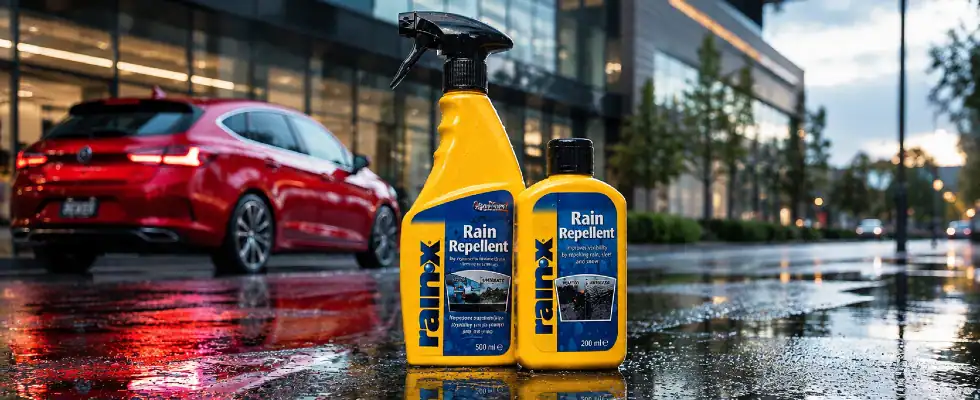
Rain-X is a silicone-based repellent that’s been around for decades. It’s sold in a bottle, and you apply it directly to the glass with a cloth, working it in small circles across the entire windshield. Once it hazes over, you buff it off, and that’s basically it. It’s genuinely one of the easiest products on the market to use, which is a big part of why it’s stuck around this long.
Once it’s on, Rain-X forms a very thin silicone layer on top of the glass. When rain hits the windshield, instead of sheeting across the surface, the water beads up and rolls off, especially at highway speeds where the wind helps push those beads away. That means less time squinting through a smeared windshield and less reliance on your wipers during a storm.
The catch is durability. Rain-X’s effective lifespan typically runs about two to four weeks before you’ll start to notice performance drop-off, and most people find they need to reapply every few months at minimum just to keep decent results. In Oklahoma, where the sun is intense and rain can be sudden and heavy, that window shrinks even faster. The silicone layer wears down from wiper use, washing, road grime, and plain old UV exposure.
Rain-X Pros
- Very affordable, usually just the cost of one bottle
- Super easy application, no special tools or compounds needed
- Works well immediately after applying
- Good for glass surfaces like windshields, and can be used on other windows too
Rain-X Cons
- Short lifespan, often just a few weeks in the wiper zone
- Requires frequent reapplication to maintain results
- Can streak or haze if you don’t follow directions closely
- Offers limited protection for the surrounding trim or paint
What Is a Ceramic Coating for Glass?

Ceramic coating works on a completely different level. Instead of sitting on top of the glass like Rain-X, a glass ceramic coating chemically bonds to the surface, forming a much harder, more durable layer. This is the same basic idea behind the ceramic coatings people put on paint, just formulated specifically for glass.
Because the ceramic actually bonds to the windshield rather than just coating it, the protection lasts significantly longer. Depending on the product and how well it’s maintained, a quality ceramic coating can last up to two years, which is a massive difference compared to the few weeks you get out of Rain-X. Some drivers also use lighter spray-on ceramic products, like Ultra Glaco, which are easier to apply than a full compound-based system but still outperform silicone repellents in longevity.
A ceramic coating creates a hydrophobic surface, meaning water doesn’t just bead up; it beads up more consistently and rolls off cleaner over a much longer stretch of time. That translates to better visibility during rain, reduced wiper usage, and a windshield that stays streak-free for months at a time instead of weeks.
Ceramic Coating Pros
- Long-lasting protection, up to two years with proper care
- Superior water repellency compared to Rain-X
- Resists scratches and wear better than silicone-based products
- Improves glass clarity and reduces glare
- Protects against environmental contaminants like grime, bugs, and dirt buildup
Ceramic Coating Cons
- Higher upfront cost than Rain-X
- Requires more prep work before application
- Needs to be applied correctly, and mistakes are harder to fix
- Can be a bit more of a process for a first-timer
Rain-X vs Ceramic Coating: Head-to-Head Comparison
Durability and Longevity
This is where the two products separate the most. Rain-X’s effective lifespan is typically two to four weeks before it starts losing its edge, especially in the middle of the windshield where the wipers pass most often. Ceramic coatings, on the other hand, last up to two years when applied correctly and maintained well. If longevity is your top priority, ceramic coating is the clear winner, no contest.
Cost Over Time
Rain-X has a lower price at the register, usually just the cost of a single bottle, but because you’re reapplying it every few weeks to a couple of months, the cost adds up over a year. Ceramic coating costs more per application, but since one application can last up to two years, the actual cost per month of protection often ends up being lower with ceramic. It’s a bit like buying cheap tires you have to replace constantly versus a quality set that lasts for years; the sticker price isn’t the whole picture.
Ease of Application
Rain-X wins here, hands down. It’s super easy: clean the glass, apply, let it haze, wipe it off with a clean cloth. Most people can do the whole windshield in fifteen minutes. Ceramic coating takes more prep, careful application at the right angle, and attention to detail so you don’t end up with streaks or uneven coverage. It’s not hard, but it does require more patience and closer attention to the directions on the bottle or sheet that comes with the product.
Performance in Rain and at Highway Speeds
Our team at ShinePro believes both products genuinely work when applied correctly. Water beads and rolls off the glass with either treatment, and both improve visibility during heavy rain, especially at highway speeds where wind assists in clearing the beads. The difference shows up over time. Rain-X performs great for the first couple of weeks, then starts to fade unevenly, often leaving a hazy line where the wiper blades travel. Ceramic coatings tend to hold that clean, streak-free performance much longer and more evenly across the whole windshield.
Wiper Chatter and Streaking
Wiper chatter is a common complaint with both products if they’re applied incorrectly or left to wear down too far. A worn-out layer of either Rain-X or ceramic coating can cause your wipers to skip, squeak, or drag instead of gliding smoothly. The fix is the same either way: follow directions, apply thin, even layers, and keep your wiper blades in good condition. Ceramic coatings, once properly cured, generally produce less chatter over their lifespan simply because the surface stays more consistent for longer.
Coverage: Windshield, Windows, and Beyond
Rain-X is typically marketed for the windshield but works fine on all the windows, including the rear glass. Ceramic coatings are also versatile and can be applied across the entire vehicle’s glass, including side windows and the rear windshield, giving you consistent protection everywhere instead of just up front. Some drivers even use lighter formulas on headlights to help keep them clear of grime and bugs, though that’s a separate application from the windshield itself.
Why Oklahoma Weather Makes This Decision Matter
Oklahoma City doesn’t give your car an easy ride. Between the intense summer UV exposure, dust storms, sudden severe thunderstorms, and winter ice, your windshield takes a beating year round. That combination of sun and dirt is exactly the kind of environment that wears down a coating faster than milder climates would.
During the summer, UV exposure breaks down protective layers faster, which is part of why Rain-X needs such frequent reapplication here. Dust and grime build up quickly too, and every time you run your wipers over a dry, dusty windshield, you’re adding a bit of wear to whatever coating is on there. Then heavy rain rolls through, sometimes without much warning, and that’s exactly when you want your windshield performing at its best, not halfway through its lifespan.
Winter brings its own challenges. A quality glass coating can make ice and frost easier to clear off in the morning, since the hydrophobic surface doesn’t let moisture cling and freeze as easily. This is another spot where ceramic coating’s longevity works in your favor, since it’s still holding up strong through the winter months while a bottle of Rain-X applied back in September has likely worn off by then.
Which Should You Choose?

Choose Rain-X If:
- You want a low-cost option and don’t mind reapplying every few weeks
- You’re doing it yourself and want something genuinely simple
- You just need a short-term boost before a road trip or a rainy stretch
- You’re testing the waters on hydrophobic glass treatments for the first time
Choose Ceramic Coating If:
- You want protection that actually lasts through Oklahoma’s seasons
- You’re tired of reapplying something every month
- You care about long-term clarity and reduced wiper wear
- You want a product that resists scratches, grime, and environmental buildup better
For most daily drivers, work trucks, and fleet vehicles we service, ceramic coating tends to be the better long-term value. It’s more of an upfront investment, but the reduced maintenance and superior durability usually make up the difference within the first year.
How to Apply Each Product Correctly
Applying Rain-X
- Wash the windshield thoroughly to remove dirt and grime
- Apply a small amount to a clean cloth
- Work it into the glass using small circular motions
- Let it haze over for a few minutes
- Buff it off with a dry, clean cloth until the glass is clear
The biggest mistake people make is applying too much product or working in direct sun, which can cause streaking. Follow the directions on the bottle closely, and you’ll get good results every time.
Applying Ceramic Coating
- Wash and decontaminate the glass to remove any old wax, grime, or residue
- Wipe the surface down with an alcohol based prep solution for a truly clean slate
- Apply the ceramic compound in small sections, working at a consistent angle
- Level and buff each section before it fully cures
- Allow the coating to cure fully before exposing it to rain or a car wash
This is where patience pays off. Ceramic coatings require meticulous surface preparation before application, and skipping steps or rushing the process is the number one reason people end up with an uneven, streaky finish. Take your time, follow the directions, and the results will speak for themselves.
Keeping Either Treatment Working Longer
No matter which product you choose, a few habits will help protect your investment:
- Avoid ammonia-based glass cleaners, which break down both silicone and ceramic layers
- Use a soft cloth when wiping the glass by hand instead of anything abrasive
- Keep your wiper blades in good shape, since worn blades chew through any coating faster
- Hand wash when possible, since automated car washes can be harder on coatings
- Check your beading periodically. If water stops forming tight beads and starts sheeting instead, it’s a sign the protection is wearing thin
What Our Customers Notice

Our team hears feedback from drivers constantly, and the pattern is pretty consistent. Customers who go with Rain-X are happy with the initial results, but a lot of them come back within a month or two, sometimes literally asking us to help touch things up or just wondering why the beading stopped working the way it did on day one. That’s simply the nature of a silicone-based repellent; it’s not a flaw, it’s just how the product is built.
Customers who invest in a ceramic coating tend to comment on how much less they’re thinking about their windshield at all. The glass stays clearer, the wipers glide instead of chattering, and they’re not stuck reapplying something every few weeks. As one of our active members on the service side likes to put it, a good ceramic coating is the kind of thing you forget about because it’s just quietly doing its job in the background.
The Best Windshield Treatment for Oklahoma Drivers
Both Rain-X and ceramic coating do what they claim: they help water bead and roll off your glass, they improve visibility during rain, and they cut down on wiper use. The real difference comes down to how long you want that protection to last and how much upfront cost and prep work you’re willing to put in.
For occasional use, tight budgets, or drivers who just want a quick fix before a trip, Rain-X remains a solid, easy option. For daily drivers navigating Oklahoma’s tough mix of sun, dust, and sudden storms, a ceramic glass coating is the treatment that actually holds up season after season, protecting your visibility and your investment for the long haul.
If your windshield needs more than a coating can offer, whether that’s a chip, a crack, or a full windshield replacement in OKC, our team is here to help. From glass repair and replacement to detailing and protective coatings, ShinePro handles it all so your vehicle stays road-ready no matter what Oklahoma weather throws at it. Reach out today and let’s get your windshield performing exactly the way it should.


