
When a client sees your truck pull into their driveway or parking lot, they form an opinion before your driver ever says a word. Fleet detailing directly impacts customer perception by making that first impression look professional, reliable, and well cared for, which helps customers trust your business and strengthens your brand. At ShinePro, we work with fleet owners and business managers across Oklahoma City every day, and we can tell you firsthand that fleet detailing isn’t just a maintenance task; it’s a strategic decision that shapes how customers perceive your entire business.
If you’ve ever wondered whether investing in regular fleet detailing actually moves the needle on customer satisfaction and repeat business, this article breaks down exactly why it does and what it means for your bottom line. You’ll see how fleet appearance affects customer impressions and brand trust, how detailing supports vehicle maintenance and safety, how it can lift employee morale, and how to make regular detailing part of a smarter long-term business strategy that protects your investment and helps every vehicle work harder as a moving advertisement.
First Impressions Start With What Customers See
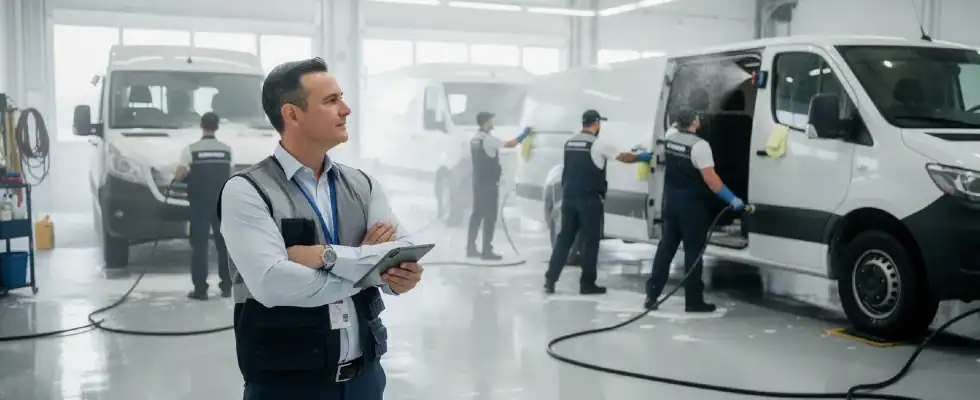
Your fleet vehicles are often the first physical touchpoint a customer has with your company. Before they meet your team, review your paperwork, or experience your service, they see your trucks. That single glance tells them a lot.
Studies show that over 70% of consumers form impressions based on fleet appearance alone, and that can significantly impact how they judge your company. That’s a staggering number when you consider how much time and money goes into logos, websites, and marketing, only for a dirty truck to undo it in an instant and add to the cost of letting your appearance slip. More than half of consumers also believe that fleet appearance directly reflects the quality of the service they’re about to receive. A dirty, grime-covered vehicle sends a message, whether you intend it or not, and it’s rarely the message you want.
Think of every truck in your fleet as a moving advertisement. Every time it’s on the road, parked at a job site, or sitting outside a dealership, it’s representing your brand image to anyone who happens to look its way. A pristine fleet says you care about the details. A neglected one raises doubts before a single word is exchanged.
Clean Vehicles Build Brand Trust and Reinforce Professionalism
Customer perception isn’t just about looking nice; it’s about signaling professionalism and reliability. When customers perceive your trucks as clean and well-kept, they naturally assume your business operations are just as organized and dependable behind the scenes, with maintaining vehicles serving as a visible sign of reliability.
A consistent detailing program ensures every vehicle in your fleet represents the company uniformly, which matters more than most business owners realize. If one truck looks sharp and another looks like it hasn’t seen a car wash in months, that inconsistency chips away at brand trust. Customers notice, and it makes your company feel less reliable, even if your actual service quality hasn’t changed.
Regular detailing also preserves the color and visibility of your branding, logos, and vehicle wraps. Faded paint and sun-damaged decals are hard to read from a distance, which weakens the advertising value of your fleet vehicles. A clean fleet doesn’t just look better; it works harder for your business every time it’s on the road.
Over time, a spotless fleet reflects high standards and attracts customers who are comparing you against competitors. In a market where clients are often choosing between several similar companies, small details like a clean fleet can enhance your professional image enough to tip the decision in your favor while it enhances customer satisfaction and trust. Clean trucks can lead to increased sales and repeat business simply because customers trust what looks cared for.
Protecting Your Investment: Why Regular Detailing Extends Vehicle Life
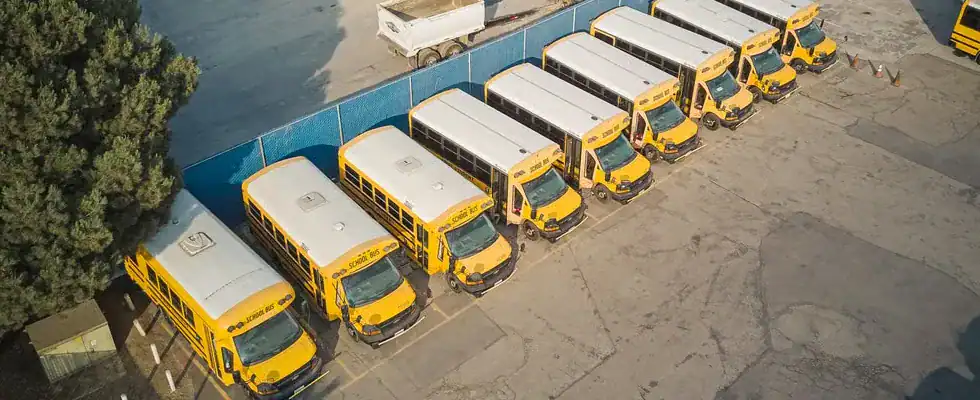
Beyond the customer-facing benefits, regular fleet detailing is one of the smartest financial decisions a fleet owner can make. Vehicles are a major line item in any budget, and protecting that investment should be a top priority.
Professional detailing protects vehicles from UV rays, road salt, dirt, and other elements that wear down a vehicle’s finish over time. In Oklahoma City’s climate, where vehicles face intense sun exposure for much of the year along with seasonal road salt during winter months, regular detailing is essential to maintain both appearance and structural integrity.
Regular washing prevents rust and corrosion on vehicle surfaces, especially in areas prone to trapping moisture, dirt, and grime. Left untreated, these issues don’t stay cosmetic for long; they turn into costly repairs. Consistent detailing reduces the need for frequent vehicle replacements, which means more money staying in your business instead of going toward premature fleet turnover.
Paint correction and ceramic coating are two services we recommend for fleet owners serious about protecting their investment long-term. Paint correction removes swirl marks and surface damage that accumulate from repeated washing and everyday wear, restoring a vehicle’s finish to a like-new appearance. Ceramic coating then adds a protective layer that helps repel dirt, grime, and UV damage, extending the life of that finish between details. Together, these high-quality products keep your fleet looking sharp while minimizing downtime for more intensive repairs down the road.
Clean vehicles also maintain optimal performance and reliability. Dirt and grime buildup in and around key components can contribute to mechanical issues over time, and a regular detailing schedule gives your team the chance to catch small problems before they turn into expensive ones.
Safety Benefits That Are Easy to Overlook
Fleet detailing isn’t only about appearance; it plays a real role in safety too. Clean vehicles improve visibility through spotless windows and mirrors, which matters for drivers navigating traffic, tight job sites, or long routes throughout the day. A clean fleet enhances safety by ensuring clear backup cameras and unobstructed sightlines, reducing the chances of accidents on the road.
Regular detailing also helps your team identify hidden defects before they become dangerous. When a vehicle goes through a thorough interior and exterior detail on a consistent schedule, technicians are more likely to spot cracks, leaks, or wear that might otherwise go unnoticed until they cause a bigger problem. That’s a level of protection that benefits your drivers, your customers, and your business operations all at once.
The Impact on Employee Morale and Company Culture
It’s easy to focus entirely on how customers perceive a clean fleet, but the impact on your own team is just as significant. Employee morale improves when drivers operate clean and well-maintained vehicles. There’s a real sense of pride that comes from showing up to a job in a truck that looks and feels well cared for, and that pride translates into how drivers represent your company throughout the day.
Drivers in clean vehicles feel more respected and valued, which contributes to better driver morale across the board. A clean fleet can lead to improved productivity among employees who take pride in their work environment, including the vehicle they spend hours in every day. Employees generally prefer working for companies that maintain clean fleets, and over time, companies that stick with a consistent cleaning routine often see that preference show up in company culture and employee retention rates. Investing in your fleet is, in many ways, investing in your people too.
Making Fleet Detailing Part of Your Business Strategy

At this point, it should be clear that fleet detailing isn’t a nice-to-have; it’s a core part of protecting your brand, your vehicles, and your team. The question isn’t whether regular detailing is worth it; it’s how to build a schedule that keeps your fleet consistently clean without pulling your team away from their real job.
That’s where partnering with professional fleet services makes all the difference. At ShinePro, we handle the exterior wash, interior cleaning, air vents, paint correction, and ceramic coating so your fleet always looks its best, without adding another task to your team’s plate. Our mobile service comes directly to you, minimizing downtime and keeping your trucks on the road and out of the shop.
If you’re ready to enhance customer satisfaction, strengthen your brand image, and protect your fleet for the future, ShinePro is here to help. Contact us and let’s build a maintenance schedule that supports long-term results, keeps your fleet looking sharp, your drivers proud, and your customers coming back. You can also check out our latest post for more fleet care advice.
This guide is built for pet owners who regularly travel with dogs or cats and want practical ways to keep a cleaner, more comfortable vehicle. You’ll learn why pet hair is so hard to remove, which tools work best, how to clean different interior surfaces step by step, what mistakes make the job harder, how to prevent buildup, and when it’s worth calling a professional detailer.
Why Pet Hair Is So Hard to Remove From a Car
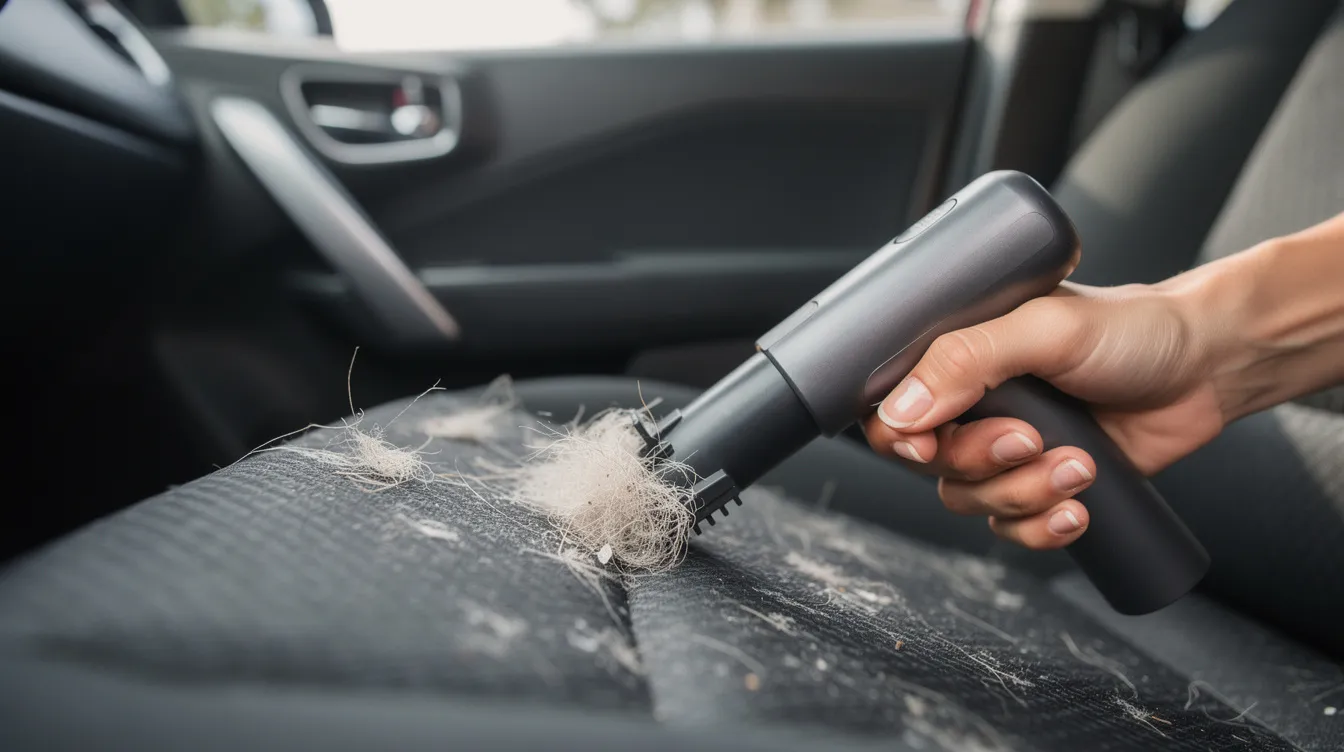
Before we get into the how, let’s talk about the why. Pet hair doesn’t just sit on top of your seat fabric or carpet fibers; it works its way in. Every time your dog jumps in and out, or your cat curls up on the seat, static electricity builds a static bond between the hair and the fibers underneath. That static cling is the main reason a regular vacuum pass never seems to get all the hair.
Short hair from cats and short-haired dog breeds is often the worst offender because it’s thin enough to weave itself deep into carpet fibers and seat fabric. Once it’s embedded, simple suction from a vacuum just isn’t strong enough to pull it loose. That’s why the first rule of pet hair removal is this: you have to loosen embedded hair before you can vacuum it away.
The Best Tools for Pet Hair Removal
Over the years, we’ve tested just about every pet hair remover tool on the market, and a few stand out for actually getting the job done.
Rubber gloves and rubber brushes. This is our go-to method, and for good reason. Damp rubber gloves create friction against seat fabric and carpet without damaging the material. Rub in short strokes, working in one direction, and you’ll see clumps of hair start to roll up almost immediately. A rubber bristle brush works the same way and is especially good on cloth seats and carpets where hair is packed in tight.
Rubber squeegee. A squeegee is one of the most underrated tools for this job. Dragging a squeegee across seat fabric or carpet gathers pet hair into rows that are easy to pick up or vacuum. It’s fast, it’s cheap, and it works on both car seats and floor mats.
Vacuum with the right attachments. A strong vacuum is non-negotiable, but the attachment matters just as much as the suction power. Vacuum attachments like a crevice tool help you reach seat seams, the gap between the seat and console, and other hard-to-reach areas where hair tends to hide. A dedicated pet hair attachment with a rubber or bristle head will outperform a standard nozzle every time.
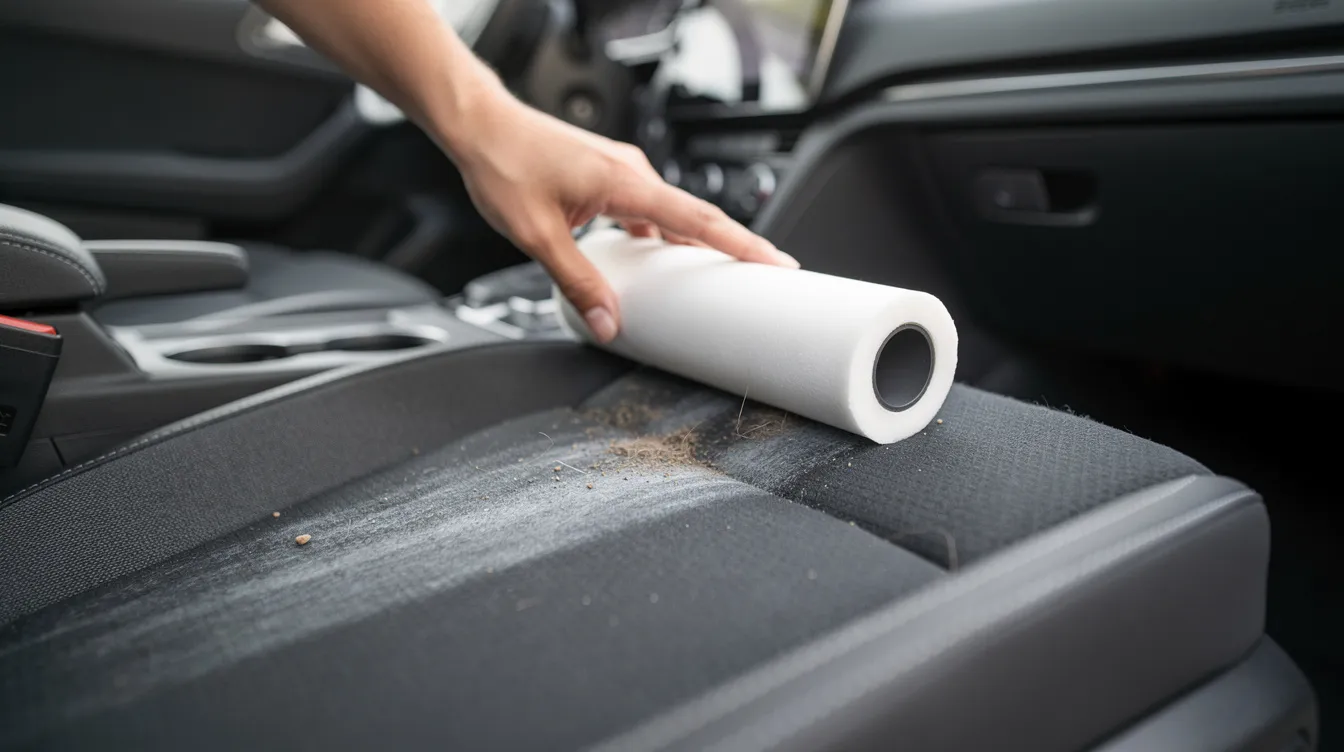
Lint roller. A lint roller is a great finishing tool. It won’t handle deeply embedded hair on its own, but for a quick touch-up it removes about 70 percent of loose surface hair in seconds. Keep one in your glove box for between-wash maintenance.
Lilly Brush. If you want a tool built specifically for this problem, a Lilly Brush is worth the investment. These brushes are designed to pull hair out of upholstery and carpet fibers in a way that a generic brush tool can’t match, and in our experience they can remove close to 100 percent of embedded pet hair when used correctly.
Chemical Guys Pet Hair Rubber Brush. This is another solid pick, usually priced around $8.99, and it’s a favorite among pet owners who want a reliable, affordable rubber brush option they can keep in the car at all times.
Pumice stone. For truly stubborn dog hair or stubborn fur that won’t budge with a brush alone, a pumice stone can help lift deeply embedded strands from carpet. Use it gently and in short strokes, since it’s more abrasive than rubber tools.
Step-by-Step: How to Remove Pet Hair From Car Interiors
Here’s the process our detailing team follows every time, whether we’re doing a quick refresh or a full deep cleaning.
1. Open the doors and clear everything out. Start by opening doors wide for airflow and pulling out floor mats, seat covers, blankets, and any loose items. Leaving them this way helps the interior ventilate and dry as you work, while cleaning these separately keeps loose hair from spreading back into the vehicle.
2. Vacuum first to remove loose hair. Before you touch a brush or glove, vacuum the entire interior, including carpets, seats, and floor mats. This clears away surface dirt and loose hair so you’re not just pushing debris around later.
3. Loosen embedded hair with a rubber glove or brush. This is the step most people skip, and it’s the reason so much hair gets left behind. Using the rubber glove method, put on a damp rubber glove, or grab a rubber bristle brush, and work the seat fabric and carpet in short strokes, always in one direction. You’ll start to see dog hair and cat hair ball up into visible clumps. Working in one direction breaks the static bond instead of just spreading it around, which means less hair gets pushed deeper into the fibers.
4. Try a diluted fabric softener solution for extra static reduction. Mixing a small amount of fabric softener with water and lightly misting the fabric can reduce static electricity in carpet fibers, making stubborn pet hair release much more easily. Go light with this; a heavy spray can leave fabric damp for too long, so a fine mist is all you need. Always test on a hidden spot first.
5. Gather the hair into piles. Once the rubber glove or squeegee has done its job, you’ll have rows and clumps of hair sitting on top of the fabric. Pick up the larger clumps by hand or with a microfiber towel before vacuuming.
6. Vacuum again with the right attachments. This second vacuum pass is where you actually remove pet hair for good. Use a crevice tool for seams, seat backs, and gaps, and a wider upholstery attachment for open areas of the seat fabric and carpet. Go slow and overlap your passes.
7. Handle hard-to-reach areas. Seat rails, the space between the seat and center console, and door pockets are notorious for trapping hair. A crevice tool or a small brush tool can get into these tight spots where a vacuum alone can’t reach.
8. Wipe down hard surfaces. Dashboards, door panels, and trim can collect fine hair too. A damp microfiber towel picks this up without scattering it into other parts of the cabin.
9. Finish with a lint roller. After vacuuming, run a lint roller over the seat fabric one more time to catch any leftover strands the vacuum missed. A portable pet hair removal tool can also help with quick touch-ups on seats between cleanings. This last pass is what makes the difference between a car that looks clean and a car that’s actually pet hair free.
Tips for Different Surfaces
Not every surface in your car should be treated the same way, and using the wrong tool on the wrong material can cause damage.
Cloth seats and carpets respond best to rubber gloves, rubber brushes, and squeegees. Work with the grain of the fabric first, then go over it again in a slightly different direction if hair is still stubborn.
Leather and vinyl seats should be treated more gently. Skip the pumice stone and stiff brushes here. A soft vacuum brush attachment and a microfiber towel are enough to pull hair out of seams and creases without scratching the surface.
Floor mats should always come out of the vehicle for cleaning. A stiff brush or rubber squeegee works well here since mats can handle more aggressive agitation than seat fabric.
Plastic trim and door panels just need a dry or slightly damp microfiber towel. Avoid pushing hair into vents or switches.
Preventing Dog Hair and Cat Hair From Building Up
Removing pet hair is only half the battle. Preventing dog hair and cat hair buildup in the first place saves you time and keeps your car’s upholstery looking better for longer.
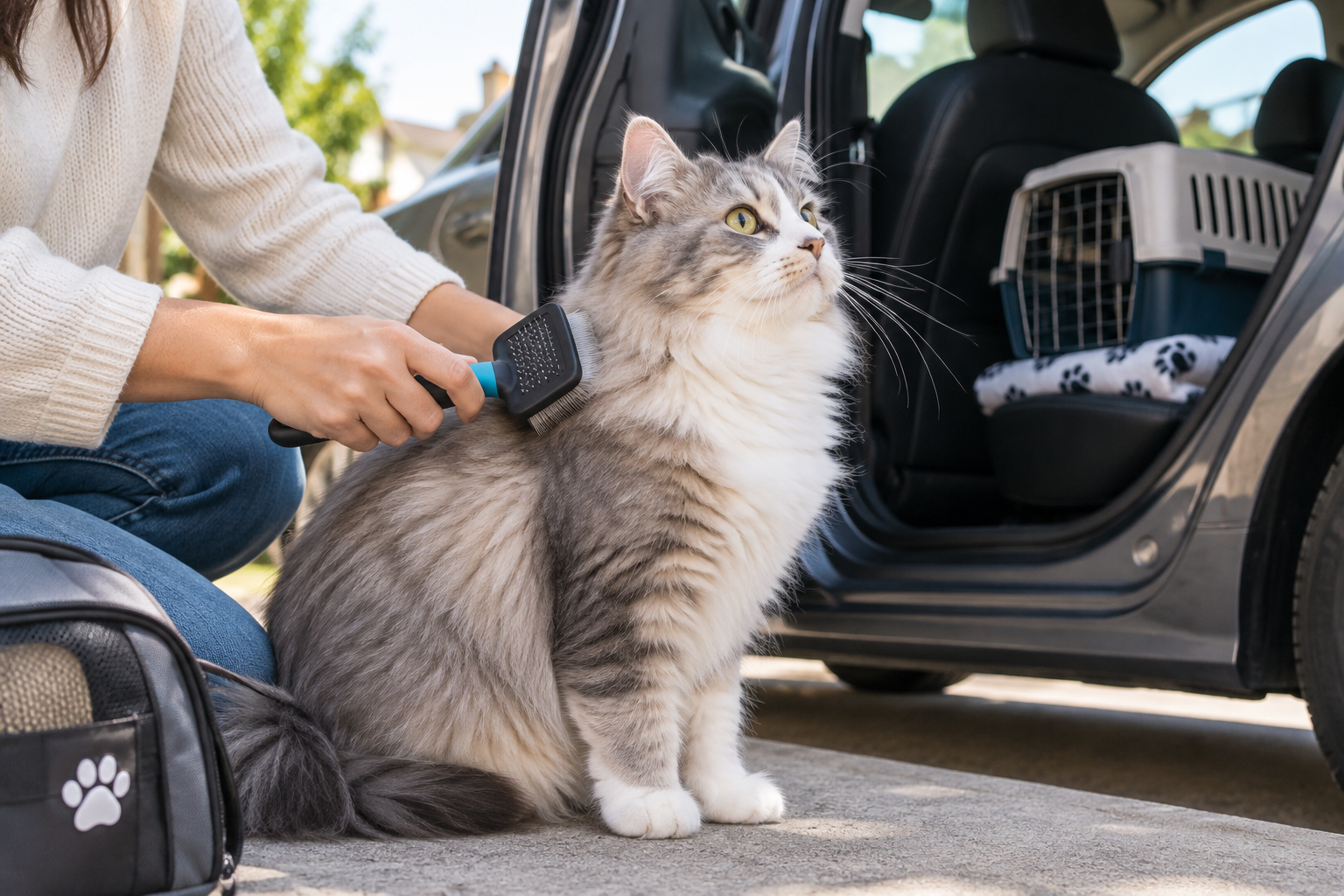
- Brush your pet before car rides. Brushing your dog or cat before they hop in reduces the amount of loose fur they bring with them, which means less hair ends up on your car seats to begin with.
- Use seat covers. A washable seat cover or hammock-style cover can help reduce pet hair buildup on the seats because it catches fur before it reaches the fabric, and you can remove and clean the cover more easily than deep cleaning the seat itself.
- Consider a pet carrier. For smaller pets, a carrier limits how much hair spreads throughout the cabin.
- Train your dog to stay in one area. Restricting your pet to the back seat or cargo area keeps hair concentrated in one zone instead of spread across the whole interior.
- Vacuum regularly. Don’t wait until hair is deeply embedded. A quick vacuum after every trip means far less hair to deal with down the road, and regular grooming combined with regular vacuuming minimizes shedding buildup significantly over time.
Common Mistakes to Avoid
We see these mistakes constantly, so it’s worth calling them out:
- Vacuuming without loosening embedded hair first, which just leaves stubborn pet hair behind.
- Soaking fabric with too much water or fabric softener solution instead of using a light mist.
- Using a pumice stone or stiff brush on leather, vinyl, or delicate trim.
- Skipping seat seams, rails, and other hard-to-reach areas.
- Relying on a lint roller alone for a heavily furred interior. It helps, but it won’t replace a proper deep cleaning.
When It’s Time to Call in the Pros
DIY methods work well for regular maintenance, but sometimes dog hair and cat hair get so deeply embedded that home tools just can’t finish the job. If your car’s interior has years of buildup, persistent odors, or hair packed into areas you simply can’t reach, that’s when professional car detailing makes the difference.
At ShinePro, our team offers car wash and detailing support for pet-hair-heavy interiors, using commercial-grade vacuum attachments, rubber brush tools, and deep cleaning techniques to remove pet hair that home methods leave behind. We know exactly how to work carpet fibers, seat fabric, and upholstery without damaging your interior, and we treat every vehicle like it’s our own. If you’re a pet owner who wants your car clean and fur-free without spending your weekend on it, ShinePro detailing is built for exactly that.
Keep Your Car’s Interior Pet Hair Free
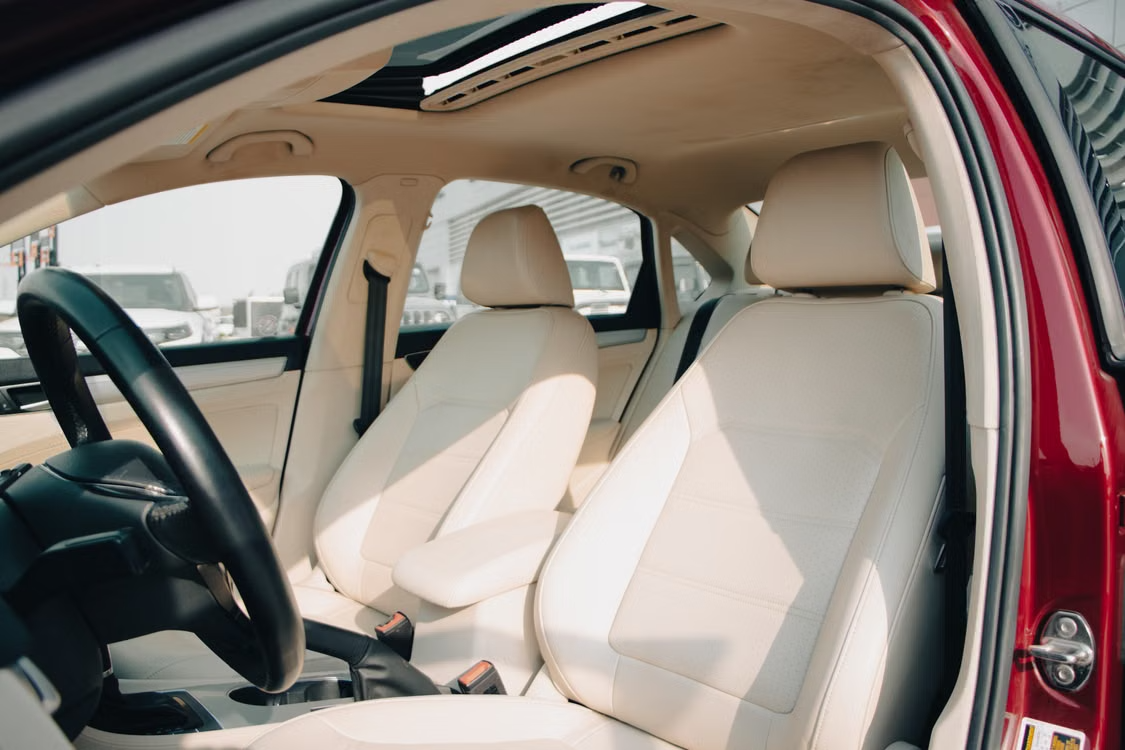
The secret to a truly clean car interior isn’t one magic tool; it’s the right sequence: vacuum first, loosen embedded hair with a rubber glove or brush, vacuum again, and finish with a lint roller for anything left behind. Add in a little prevention, like brushing your pet before rides and using seat covers, and you’ll notice far less hair showing up trip after trip.
If you’d rather leave it to the experts, our detailing team is ready to help.Reach out to ShinePro and let us handle the deep cleaning so you can enjoy the ride with your furry friend, hair-free.




