Living in Oklahoma means tornado season is not just a weather event on the calendar; it is a real threat that every driver needs to take seriously. Every spring, severe weather develops quickly across the plains with little warning, turning ordinary afternoons into dangerous emergencies within minutes. For anyone who owns a car, truck, or fleet vehicle, the stakes are high. When severe weather strikes, your vehicle is one of the first things in its path.
Oklahoma sits squarely in the heart of Tornado Alley. When a tornado forms nearby, the potential damage can escalate from minor injuries to total vehicle loss in a matter of seconds. Flying debris, tornado winds reaching extreme wind speeds, downed power lines, and heavy rain all combine to hit vehicles hard. Understanding how to protect your car before the storm hits can make all the difference between driving away unscathed and filing a costly insurance claim. This guide covers everything you need to stay prepared and keep your vehicle in top shape throughout the season.
How Tornadoes and Severe Storms Damage Vehicles
Before you can minimize damage, it helps to understand exactly how tornadoes and storms cause damage. The most costly damage typically comes from several hazards that develop quickly and strike at the same time.
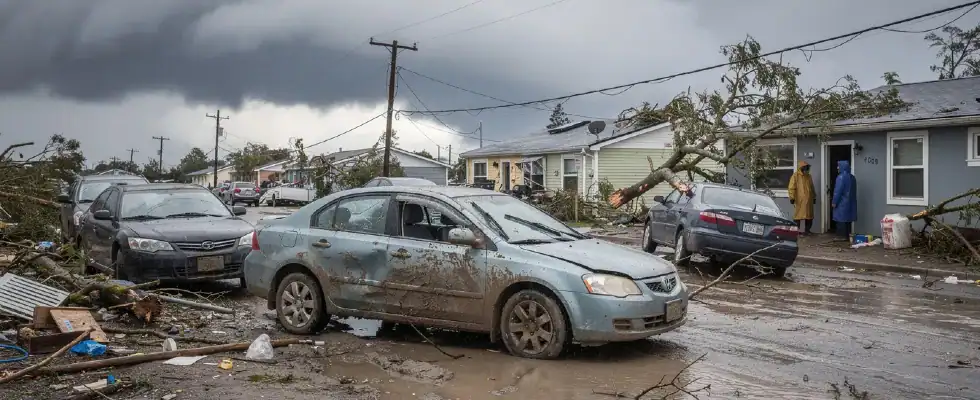
- Flying debris is responsible for the majority of broken glass, body dents, and panel damage vehicles sustain during severe storms. When a tornado occurs, it acts like a massive vacuum, lifting tree branches, roofing materials, gravel, and metal scraps and sending them airborne at devastating wind speeds. Even during a tornado watch, before a funnel cloud has fully formed, strong winds can send objects crashing into any car left in the open. This kind of flying debris causes significant damage in an instant and can even total a vehicle outright.
- High winds and strong winds compound the problem. Tornado winds can exceed 200 mph in the most intense storms, and even at the storm’s outer edges, sustained wind speeds of 70–100 mph can topple trees onto parked vehicles, collapse carports, and flip lighter cars entirely. Low visibility caused by rain and debris also makes it nearly impossible to avoid potential damage when driving during a tornado event.
- Heavy rain almost always accompanies severe storms in Oklahoma. Torrential downpours can lead to flooded roads and standing water that seeps into engines and electrical systems, causing major damage that is not always immediately apparent. Flood conditions can turn dangerous quickly, which is one more reason to avoid driving whenever a tornado watch or severe weather warning has been issued.
- Downed power lines are one of the most underestimated hazards of any tornado event. When power lines come down during a storm, they create a serious danger zone around any parked vehicle. Power loss also affects gas stations and traffic signals, meaning that even after the tornado occurs, the surrounding environment can remain dangerous for hours.
Before the Storm: How to Prepare Your Vehicle
The best tornado season vehicle protection starts well before any storm hits. Taking steps ahead of severe weather gives you the best chance to minimize damage, keep your family safe, and avoid being caught off guard when conditions develop quickly.
- Keep your gas tank full throughout tornado season. If you need to evacuate or seek shelter at a location farther away than expected, a full gas tank is essential. Gas stations may be closed due to power outages after a storm, and running low on fuel during an emergency is a situation you want to avoid entirely. Make it a habit to refill whenever your tank drops below half during the spring months.
- Build a vehicle emergency kit. Every car in Oklahoma should carry a well-stocked emergency kit during severe weather season. At a minimum, your kit should include bottled water for every passenger, a first aid kit stocked with bandages and basic medications, an aid kit for more serious injuries, extra batteries for flashlights and weather radios, and extra clothing in case you are stranded away from home. Having these supplies ready means that even if your vehicle sustains storm damage, you can keep your family safe until help arrives.
- Download and use a reliable weather app. Staying informed is one of the most powerful tools available to Oklahoma drivers. A quality weather app with real-time alerts will notify you the moment a tornado watch is issued in your county, giving you time to act before the funnel cloud appears. A tornado watch means conditions are right for tornado development. A tornado warning means a tornado has been confirmed; at that point, you need to find shelter immediately, not start preparing.
- Get a professional inspection before the season. Make sure your vehicle is in good shape before tornado season peaks. Check that your windshield is free of chips or cracks, since even minor damage can turn dangerous when hit by flying debris or hail. Confirm your tires and brakes are in top shape so you can safely navigate flooded roads if evacuation becomes necessary. A pre-season professional inspection is a simple investment that pays off when severe weather arrives.

Where to Park to Protect Your Vehicle
Smart parking is one of the most effective forms of tornado season vehicle protection. Where you choose to park your car, truck, or fleet vehicle on any given day can determine whether it survives the storm without damage or suffers major damage from flying debris and high winds.
- A garage is your best option. A fully enclosed garage is the single best place to protect your vehicle during tornado season. Even a standard residential garage provides meaningful cover from flying debris, hail, strong winds, and heavy rain. Use your garage consistently throughout the season — not just when the forecast looks threatening. Storms in Oklahoma can develop quickly and arrive ahead of schedule.
- Parking garages offer extra space and cover. If you work in Oklahoma City or another urban area, parking garages provide significantly more protection than open surface lots. Multi-story concrete parking garages shield vehicles from hail and flying debris, and the extra space inside means your car is less exposed to direct wind impact. When severe weather is in the forecast and parking garages are available nearby, always choose covered parking over an open lot.
- Avoid parking under trees or near power lines. Trees are one of the most common sources of vehicle damage during tornado season. Even healthy, mature trees can snap or uproot entirely under tornado winds. Similarly, parking near power lines puts your vehicle at risk if those lines come down during the storm. Keep your car well away from both whenever severe weather is expected.

- Use car covers when parking outside. For vehicles that must remain outdoors, investing in quality car covers rated for hail and debris protection can help minimize damage during severe storms. Multi-layer padded car covers with secure tie-down straps keep your car protected from moderate hail and airborne grit. Keep them in your vehicle throughout tornado season so you can deploy them quickly when a tornado watch is issued.
- Choose a low-lying area when no shelter is available. In rural areas of Oklahoma where covered parking simply does not exist, a low-lying area, such as a natural dip in the terrain, offers slightly more protection from direct wind exposure than open elevated ground. This is a last resort. Never park in a low-lying area that could flood, as flood conditions can cause just as much major damage as the tornado winds themselves.
When Severe Weather Strikes: What to Do
Knowing how to respond when a storm hits can keep you and your family safe and reduce potential damage to your vehicle significantly.
During a tornado watch, stay informed, avoid driving, move your vehicle into a garage or covered area if possible, and make sure your emergency kit is accessible. Avoid long trips or unnecessary driving — the moment a tornado watch is in effect, conditions can turn dangerous without much additional warning.
During a tornado warning, your sole priority is to find shelter. Do not attempt to move your vehicle. Go to your storm shelter, an interior room, or the lowest floor of a sturdy building immediately. If you are caught driving when a tornado forms nearby, follow these steps:
- Do not try to outrun the storm. Tornadoes can shift direction without warning, and trying to outrun one in a car is one of the most dangerous decisions a driver can make.
- If a sturdy building is nearby, a store, gas station, or any solid structure – pull over immediately and seek shelter inside.
- If no sturdy building is available, leave your car and find a low-lying area such as a roadside ditch. Lie flat on the ground with your hands covering your head.
- Never use a highway overpass as a temporary shelter. Overpasses funnel wind speeds dangerously and offer no real protection from flying debris.
- Stay away from downed power lines when exiting your vehicle.
Your car is replaceable. Your life is not. Always choose to find shelter over staying with your vehicle when a tornado warning is active.
After the Storm: Recovery and Next Steps

Once the storm hits and passes, the work of recovery begins. How you handle the aftermath affects both your personal safety and the outcome of any insurance claims you need to file.
Wait for the official all-clear before going outside. Downed power lines, broken glass, and structural debris make the environment around your vehicle dangerous even after the tornado winds die down. Power outages can affect traffic signals on surrounding roads, so avoid driving until conditions are confirmed safe.
Before touching your vehicle, photograph all storm damage thoroughly. Capture broken glass, dents, debris resting on the car, and the surrounding area. This documentation is critical evidence when filing insurance claims and helps ensure you receive full compensation for all damages caused by the storm.
Check for hidden storm damage. Not all potential damage is visible. Look for flooded floorboards, debris lodged beneath the vehicle, fuel leaks, and signs of structural impact. Do not start your car if you suspect serious issues. Schedule a professional inspection with a certified technician before putting the vehicle back on the road.
At ShinePro Services, our team specializes in post-storm vehicle care — from windshield repair and replacement to professional car detailing in Oklahoma City, OK, that restores surfaces hit by hail and flying debris. We offer mobile service across the OKC metro, so we come to you and minimize your downtime.
Insurance Claims After Tornado Damage
Tornado damage to your vehicle is covered under the comprehensive section of your insurance policy, not collision. Review your insurance policy before tornado season so you understand your deductible and coverage limits. Contact your insurance provider with any questions before natural disasters make that conversation urgent.
After a storm, file your insurance claims as quickly as possible. Keep receipts for any temporary shelter, hotel stays, or rental vehicles. Request a written estimate from a trusted repair provider and follow up consistently with your insurance provider, as claims departments are often overwhelmed after major natural disasters.
Stay Prepared with ShinePro Services

Tornado season is a reality for every Oklahoma driver, but the right preparation can dramatically reduce the risk of major damage to your vehicle. Keep your car in top shape before the season starts, make smart decisions about where you park, stay informed through a reliable weather app, and know exactly what steps to take when severe weather strikes.
At ShinePro Services, we help Oklahoma drivers and fleet operators protect and restore their vehicles year-round. From professional car detailing in Oklahoma City, OK, to windshield repair, pressure washing, and mobile fleet maintenance, we are your one-stop shop for keeping every vehicle road-ready, no matter what tornado season brings.
Contactus today or email shineprokolton@gmail.com. Proudly serving Oklahoma City, Edmond, Moore, Norman, Yukon, Mustang, Blanchard, Del City, Guthrie, Newcastle, Shawnee, Tuttle, and surrounding communities.