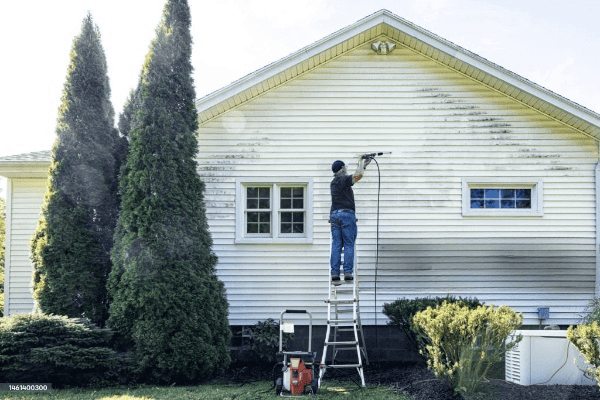
At ShinePro, we know that a power washer is only part of a successful cleaning job. What you spray on concrete before pressure washing often has more impact than the nozzle’s power itself. Whether you’re preparing driveways, patios, sidewalks, or garage floors, selecting the right cleaning solution and understanding the different cleaning methods—such as soft washing, pressure washing, and power washing—can make your concrete shine without damage.
Related Article: Pressure Washing Before Painting Your Home: A Comprehensive Guide
In this blog, we’ll explore everything you need to know about preparing concrete surfaces, from the differences between what is soft wash pressure washing and standard pressure washing to DIY cleaning solution recipes, ensuring your next cleaning experience is smart, efficient, and effective. The main difference between these two methods is that soft washing uses lower water pressure and specialized cleaning solutions, while standard pressure washing relies on higher pressure, which can affect the surface differently.
1. Why Pre-Treat Concrete Before Washing?
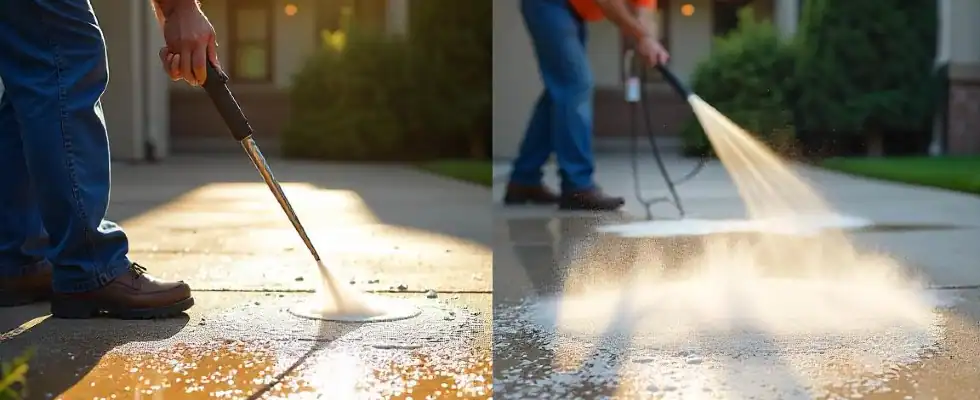
Concrete on its own is porous and prone to staining. While a high-pressure spray can remove loose dirt, deep-seated organic stains like algae, mildew, oil, rust, and grease often require a chemical boost to detach. Pre-treating helps:
- Loosen embedded debris
- Minimize high-pressure cleaning damage
- Cover more surface area with less scrubbing
- Mitigate the risk of drive-by excessive runoff into surrounding areas
- Solve organic stains like mildew spores, moss, and bacterial life
Regular cleaning may not be sufficient to remove deep stains and built-up grime, making pre-treatment and specialized washing necessary for thorough results.
Bottom line: spraying the right concoction before washing ensures the concrete is thoroughly cleaned, achieving results that a power washer alone can’t.
2. Power Washing vs. Soft Washing: Understand the Difference
Before choosing your spray, you’ll want to understand your cleaning method. Both pressure washing and soft washing have their place depending on the surface and cleaning needs, as each method is suited for different materials and levels of grime. Power washing blasts away tough stains on hard surfaces using high-pressure water, while soft washing takes a gentler approach—using low pressure and specially formulated solutions to clean more fragile or sensitive areas. The main difference between the two comes down to washing and pressure, with each technique offering unique benefits for specific cleaning tasks.
Pressure Washing Power Washing
- Uses pressurized water (2,000–4,000 PSI+) to blast dirt
- Great for tough concrete, asphalt roofs, driveways, and sidewalks
- Riskier for fragile surfaces like cedar shake, painted walls, or delicate trims
Pressure washing and power washing both rely on pressure water to effectively clean surfaces, making them ideal for removing stubborn grime and stains.
Soft Washing
- Soft washing involves using a low-pressure washing technique (under 500 PSI) combined with specialized cleaning solutions to safely and thoroughly clean exterior surfaces.
- A chemical mixture, typically including sodium hypochlorite-based solutions (bleach), water, and surfactants, is applied using soft washing equipment for deep-cleaning without damage. The chemical nature of these cleaning solutions ensures that the right balance of chemicals is used to break down and remove organic growth effectively.
- A water mixture is sprayed onto the surface, allowing the cleaning solution to penetrate and treat delicate materials—roofing materials, siding, and wood. Soft washing uses a higher volume of solution and less pressure than traditional pressure washing, ensuring thorough coverage and protection of sensitive surfaces.
- The process can effectively remove algae, moss, and organic stains, restoring the appearance and integrity of the surface. Soft washing can effectively clean surfaces without causing damage, making it ideal for delicate exteriors.
- Soft washing equipment, such as soft wash systems and injectors, is designed to deliver these cleaning solutions at low pressure for safe application. It is important to protect the surrounding area, including plants and landscaping, from runoff during the cleaning process.
- Surfactants in the cleaning solution help roll up and lift dirt, algae, and contaminants from the surface, making them easier to rinse away. Water’s ability to dilute chemicals and carry away debris is crucial for a thorough clean.
With soft washing, you’re using chemistry more than water force. That means better cleaning with less risk, especially on porous surfaces like patios or evenly stained concrete.
3. What to Spray on Concrete — Cleaning Solution Options
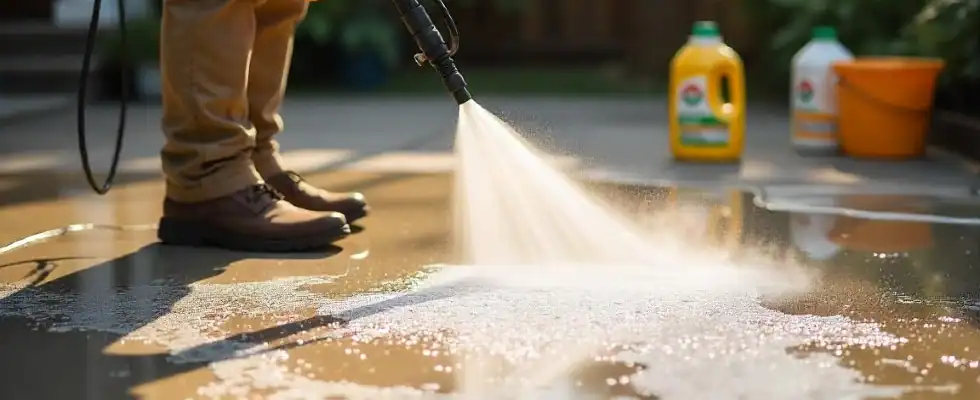
Here are the strongest formulas you can use before powering up that pressure washer. Cleaning companies often prepare a chemical mixture tailored for different surfaces to ensure effective removal of stains, moss, algae, and other contaminants. These solutions are also commonly applied before a power wash to maximize cleaning results.
Some cleaning companies also offer window washing as part of their comprehensive exterior cleaning services.
Concentrated Concrete Cleaner
- Buy formulations designed for driveways, sidewalks, and garage floors
- Usually contain alkaline surfactants, detergents, and chelating agents
- Mix per instructions (often 1:10 ratio with water)
- Spray on clean surfaces, let dwell ~10 minutes, then rinse with pressure
DIY Detergent-Assisted Washing
- Mix warm water with a bit of dish soap, some baking soda, and water—create suds
- Spread across the concrete with a brush or a pump sprayer
- Let it penetrate stains, then pressure wash off
Low Pressure Bleach / Sodium Hypochlorite + Surfactant
- Classic soft wash system solution: low-pressure bleach + surfactants
- Good for removing mildew, algae, and organic discoloration
- Use a pump sprayer, not a power washer, for application
- Let dwell for 10–15 minutes (keep concrete damp), then pressure wash off
- Protect surrounding plants and surfaces from runoff
Commercial Asphalt Roof Cleaner (Use on Concrete Only)
- Primarily designed for cleaning asphalt roofs, but sometimes used on driveways safely
- Contains sodium hypochlorite + wetting agents
- Spray lightly with a hose or soft wash nozzle
- Let sit, then pressure rinse thoroughly
Tools & Equipment You’ll Need
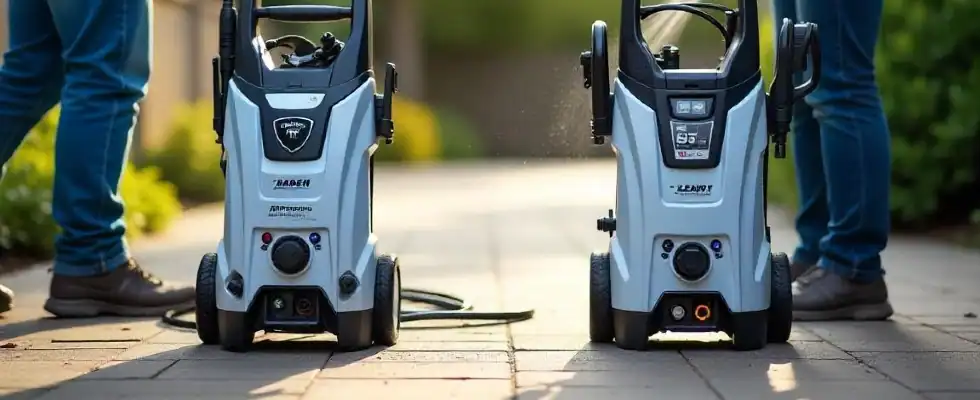
Efficient cleaning depends on having these ready:
- Pump sprayer or soft wash rig with soft washing nozzles
- Pressure washers and power washers, adjustable between 1,500–3,000 PSI, for versatile cleaning applications
- Surface cleaner attachment for decks or wide flat spaces
- Brush (stiff or medium) to agitate heavy stains
- Garden hose for dilution and flushing
- Safety gear: gloves, goggles, possibly a target spray shield on the nozzle
ShinePro’s soft wash system is compact yet professional, perfect for treating driveways, garage floors, and sidewalks in any Oklahoma City location.
Step-by-Step Cleaning Process
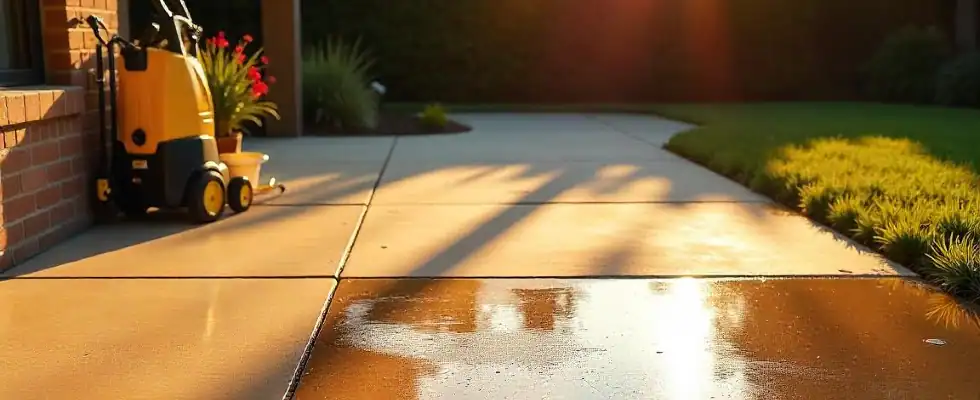
Here’s our tried-and-true method:
- Clear the area: Remove cars, toys, garden pots
- Dry sweep to loosen dust
- Dampen the concrete with a garden hose
- Spray cleaning solution thoroughly across the surface
- Let dwell 10–15 minutes, stay damp—watch edges for damage
- Agitate stained areas with a stiff brush, then let sit
- Surface is pressure-washed using a pressure washer with a surface cleaner or nozzle, then rinsed thoroughly
- Work in sections to avoid streaks
- Rinse off detergent and residues, protecting landscaping from runoff
- Allow to dry before sealers or regular use
Optional add-on: apply sealer or anti-slip coating once the concrete is clean and dry.
What Type of Stains Are We Treating?

Your cleaning mix matters based on the stain type:
- Organic stains: mildew, moss, root systems, algae → use bleach-based spray + surfactant
- Grease or oil: use detergent-assisted method, maybe scrubbing
- Rust or hard water streaks: use acid or special rust remover (follow local regs)
- Paint spots or overspray: Use degreaser or paint stripper before washing
Advantages of Adding Pre-Treatment
You’ll notice the benefits right away, and over time, they really stack up:
- Reduces the amount of high-pressure cleaning needed—safer for surfaces
- Cuts time cleaning by up to half
- Helps remove deeply embedded stains
- Improves your overall power washing results
- Limits streaking—easier, faster, and even coverage
Without pre-treatment, you could easily spend much more time and effort trying to get your surfaces clean.
Why Soft Washing Plays a Role
The question, “What is soft wash pressure washing?” matters in planning. Soft washing is especially effective for cleaning the home’s exterior, as it gently removes dirt, mold, and mildew from surfaces like siding, roofs, and gutters without causing damage. The soft washing method—applying chemicals at low pressure—is perfect for situations where high PSI could damage surface texture or landscaping. This preferred method allows cleaning agents to penetrate pores, tackle mold and mildew, and kill organic life without blasting damage.
Environmental Considerations
Strong cleaning chemicals, especially bleach, require care:
- Use proper dilution—typically ~1–2% bleach
- Avoid excessive runoff by wetting nearby plants
- Rinse runoff into the lawn or gravel, not storm drains
- Consider eco-friendly alternatives when possible
- Limit bleach use near other plants, aquatic life, or root systems
When to Choose ShinePro’s Services
This is where ShinePro’s commercial-grade capabilities shine:
- Big driveway, warehouse apron, loading dock?
- Nearby vegetation, fences, siding, or landscaping
- No time to mix solutions, don safety gear, rent trailer rigs
- Want commercial power washing in Oklahoma City OK, pro-level cleaning
Our trained technicians bring industrial soft wash system setups, professional-grade detergents, and surface cleaners—delivering a job that looks great and protects concrete for years to come.
Commercial Power Washing Oklahoma City OK

If you’re managing a large property, commercial complex, or business frontage, ask us about commercial power washing in Oklahoma City, OK. We handle sweeping sidewalks, dumpster pads, loading areas, parking garages, and more, paired with the perfect cleaning solution pre-spray.
Soft Wash vs. Pressure Wash – Which to Use?
Here’s a quick comparison:
Soft Wash
- Low pressure (<500 PSI)
- Uses a cleaning solution mixture, usually including sodium hypochlorite
- Ideal for delicate concrete, roof areas, and algae-infested zones
Pressure Wash
- High-pressure, power washer blasts 2,000–4,000 PSI
- Great for driveways, garage floors, and asphalt
- Best when combined with pre-treatment
Health & Safety Tips
- Read labels on all cleaning chemicals
- Use gloves and eye protection
- Keep pets and children away during the application and rinse phases
- Let the dwell time pass before rinsing surfaces
- Rinse thoroughly to avoid slip hazards once dry
Cost Comparisons: DIY vs. Professional
- DIY pre-treatment items (pump sprayer, detergent, bleach): ~$20–50
- Power washer rental: $60–100/day
- DIY effort: 1–2 days for driveway & patio
- ShinePro commercial service: Fair rate + professional-grade equipment + waste handling + environmental compliance
You’ll often find DIY costs close to pro, but pros deliver better results, faster, and safer.
Extending Concrete Lifespan
A thorough early cleaning helps:
- Uncover cracks before they worsen
- Reduce erosion from pollutants
- Preserve that “new look”
- When combined with sealers, maintenance drops to yearly or bi-annually
Get Professional Results with ShinePro
If your garage floor, driveway, sidewalk, or commercial entry has seen better days, ShinePro is here to help. With industrial soft wash systems, expert pre-treatment recipes, and power-washing skills honed over the years, we deliver commercial-grade results with care.
For more, check out the Pressure Washing Info Hub.
Contact us today to schedule commercial power washing in Oklahoma City, OK, for sparkling clean concrete and long-term protection—and get the most from your cleaning investment!